
Quality
"What is their thinking behind this?"
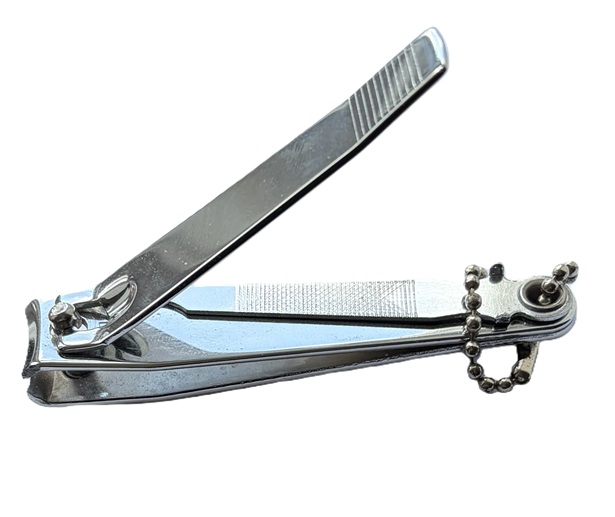
A young lady is not annoyed nor overly distraught by the discovery, but most certainly displeased. She has bought some nail clippers and found them to be most unsatisfactory. They just do not cut/clip well at all. She is asking why they have been made to such low quality. What is the thought process behind producing something like this, something that is nigh on useless.
To answer her question, we must delve into manufacturing costs, distribution responsibilities, marketing and consumer feedback. It will be safe to assume these clippers were not made by a reputable brand. Will she take them back to where she has bought them and ask for a refund? Some people will, most won’t bother.
Homebase and their drill bit set.
Homebase used to stock an 8-piece tungsten carbide drill set. £30. That is not cheap, or to put it another way, not low cost. Those bits however, were rather good. in fact, they were very good indeed. The problem is, is that many humble bodgers and codgers will be somewhat reluctant to part with £30 for a few drill bits. Homebase discontinued selling these and put some alternative sets in their stores instead, priced at around £16. At that price a lot more people are tempted to buy them.
I suspect the profit on both sets were roughly the same. The nice ones have a store cost of £20 and the inferior ones £6.
The good ones may drill a hundred holes. The cheaper ones, perhaps ten. Not only will they go blunt much quicker, but the holes they make will be rougher. Whilst this set is cheaper, it costs more per hole drilled. 16p per hole vs 3p. That is my guess based on experience. One could debate the topic for quite some time as it depends on the depth and hardness of the material one is drilling holes into. However, you get the gist.
You may see some shops selling similar looking drill bit sets for £5. These will probably make a hole in your wallet and little else.
So, where does the problem lie? Markup. Consumers wanting cheap. Lack of knowledge. Lack of experience. Where once personal recommendations led the way, reviews and online product appraisals have become common place. These of course are subject to meddling and bias.
If you buy something from a shop and it proves to be faulty you can return it for a refund. If however you travel to China and purchase a pallet or two of goods you may struggle to get a refund if what they ship you turns out to be of lower quality than you expected.
You as a wholesaler may swallow a percentage of returns. You bin a small percentage that shops send back to you. Given the low cost of each item and the relatively high markup, that is often not a problem. You buy and sell factoring in a certain return rate. Much of the junk you distribute will be put in the bin anyway, so you have little to fear. Expectations along the chain will be low.
Do the sums. Buy for £1 sell for £5.
400% markup.
Buy for £6 sell for £16.
166% markup.
Buy for £20 sell for £30.
50% markup.
Now factor in taxes. The dent to profit is even more stark.
84p - 21%
266p - 26%
500p - 50%
Low quality items have a high percentage markup. The capital outlay is low. Aka you can buy vast quantities for little money.
There is nowt queer as folk.
My housekeeper buys non-stick saucepans, non-stick frying pans. She buys replacements annually. They get damaged easily. They do not last long. Me on the other hand, stainless steel. They last decades. However, people like the idea of non-stick despite the questionable health risks. I would rather scrape the bottom of the pan for I value health over foibles. I spent £50 once, she has already spent £8 twenty times. £160+.
People gravitate towards the colour of things. Dull grey, mildly yellow is rejected in favour of neon yellow. I am talking about turmeric. Bright yellow good. Browny yellowish grey bad. Except, traders are cunning.
Lead chromate is used to make brown-grey turmeric bright yellow. If you were in the least bit interested, lead chromate is something you really do not want in your body. It is not bad, it is proper bad, terrible. I am sure you can imagine what people are most likely to spend more money on. Yes, the adulterated turmeric with the lead chromate pigment. Would you add lead chromate if you could sell your stock twice as quickly for double the price.
Builders were known to throw broken bricks, bits of waste concrete, stones you name it, into the bottom of the trench. Any concrete poured on top to form a foundation now has voids at the bottom. Those little air pockets will invite a crack to form. Usually some years down the line. Will the builder return a decade later to remedy the problem? I doubt it. Neither will window installers return to put right their shoddy work. Some remove the windows and replace them but not ensure the bricks above are properly supported. It is a good while before they loosen and fall out. Knowledge as always. As a customer with knowledge, you can point out the error before they leave, before they leave a problem for someone in the future.
Whilst this lady was querying the thinking behind making lousy nail clippers, some people make things without thinking about the situation people will be in when items are used. A novel life jacket was made and installed on a selection of boats. In the office the packet was easy to open. Not so, virtually impossible, when your hands are freezing cold. Hence testing in the environment in which a product is to be used is essential.
My trip from Pyongyang to Beijing highlighted something noteworthy about the difference between things Chinese and Russian. The train split at a certain point. The rear set of carriages decoupled and were hauled off to somewhere in Russia whist the front set headed to Beijing.
The sound the carriage door made when closing was most satisfying. A perfect, sshhlunck. A light, easy to close door with a most solid feel. Not only were the doors designed, engineered, to last maybe a hundred years or more, but the fans inside above each pair of seats were solid. Metal - working as well as they were when the carriage left the assembly line. Not so in the Chinese carriages. The fans were plastic and many broken, twisted, defunct.
Russia put a temporary space station into orbit around the planet, designed for a couple of years but stayed aloft for fifteen. Russia over-engineers many things, not all things, but many things. Impressive stuff. Weight, efficiency, cost, environmental footprint; different to what other nations produce.
Whilst many things Russian have been over engineered, not so with their tanks of WW2. They were rough and ready. However, their rough and ready nature meant fast voluminous production. They could produce, I don’t know, say three tanks to every one Germany could. German tanks were built to last but lasted only a few weeks on the battlefield. You do not need it to look pretty. It just needs to function. Lousy nail clippers won’t function nicely once, let alone nicely for fifty years.
What if nail clippers did last fifty years. How does that benefit the manufacturer?
There are some that bring up the account of a former boxer who put his name to a grilling machine. Apparently, it is quite good. It grills well but also lasts decades. Word of mouth helps sales. People endorse it. However, few ever find the need to buy another one. Why would they if their original is still going strong. One thing is for sure. The boxer can sleep tight at night knowing that nothing is being sold in his name that is below par. Pride and professionalism.
I wonder if someone went to the boxer and told him that a manager at the factory, or some accountant had found a way to lower production costs. Whilst this idea saved money it compromised the quality of the grill. Would he sack the whistle-blower. I suspect not. People in the know do speak out. Some are ignored, some are let go. Politics.
Whilst Russian people show competence galore in many quarters, there have been dramatic failures that highlight major issues within what they build. One example being tips fitted to the end of control rods. To save money, carbon tips were used on the rods, rods which were inserted into their nuclear reactors to shut the reactions down. These proved to be highly problematical. People knew. They knew for decades. Decades prior to the reactor explosion.
Lousy nail clippers are symptomatic of the free market where someone somewhere doesn’t care or doesn’t care enough about what they are spending their days making. Not as insidious as the folk that produce counterfeit medicines or someone who taints foodstuffs or someone that replaces pricy ingredients with chemical muck. Free markets do benefit from government intervention which helps raise standards and safety.
Maybe we could stop feeding the scoundrels by thoroughly examining what we are about to purchase.
17th April 2026 © IgnoranceParadox